Global benefits insights: May 2026
A summary of the latest employee benefits changes from around the world | 3 minute read
Australia
Passes changes to the Superannuation Bill1
From 1st July 2026, the rules for mandatory superannuation payments will change.
Employers can currently pay superannuation contributions quarterly, although more frequent payments are allowed. From 1st July 2026, contributions must be paid when employees are paid, with funds allocated within seven days.
The basis for calculating contributions will also change from ordinary time earnings (OTE) to qualifying earnings (QE), which include OTE, salary sacrifice contributions, and other amounts counted as salary or wages for super guarantee purposes.

Brazil
Votes to expand Paternity Leave2
On 4th May 2026, Brazil’s senate approved a bill to expand the current paternity leave provision.
Under the previous bill, employees were entitled to 5 days’ paternity leave upon the birth of a child. The new bill provides 20 days’ leave that will be fully paid by the employer by 2029.
Paternity leave will increase gradually to 10 days in 2027, 15 days in 2028, and 20 days in 2029. It must be taken in one continuous period and will be extended by one-third if the child has a disability.
Although the Senate has passed the bill, it still requires the president’s signature.

South Korea
Introduces a new public holiday3
Effective from 2026, 1st May (Labor Day) will now become a public holiday for all workers.
Previously, Labor Day (1st May) was recognised as a public holiday for only those classed as workers under the Labor Standards Act (private sector).
Moving forward, Labor Day will now entitle all workers (including public sector and non-traditional) to a paid day off.

Romania
Amends employer paid sick leave requirements4
Effective from 1st February and applicable until 31st December 2027, the social health insurance allowances provided for by Government Emergency Ordinance no. 158/2005 were approved for amendment.
Under the amendment, employers must pay sick leave from days 2 to 6 of each absence, rather than days 1 to 5. These payments will be reimbursed by the government.

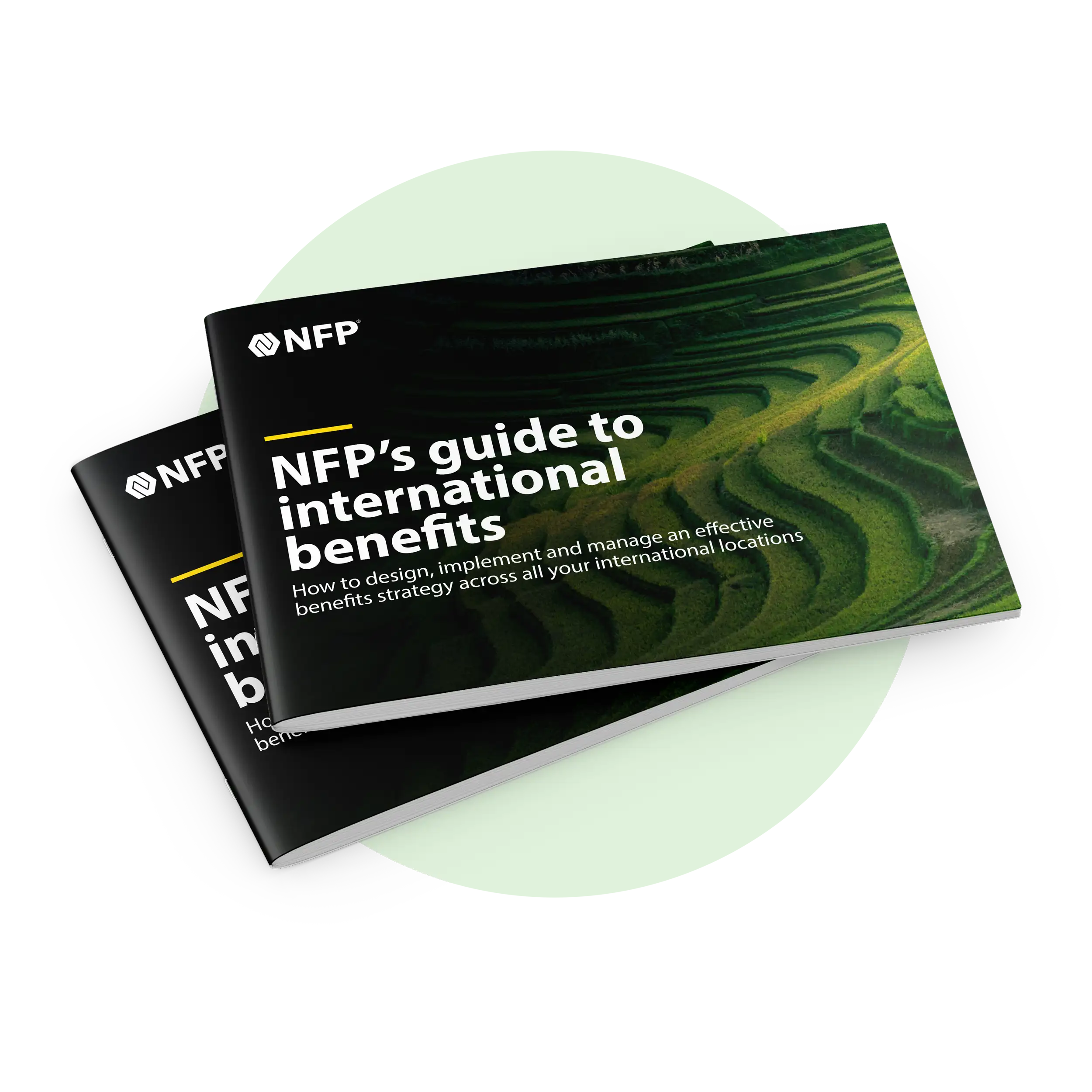
NFP’s guide to international benefits
Whether you’re a new start-up, a growing enterprise or an established international organisation, operating globally comes with its own set of unique challenges; from navigating legal and tax legislation to understanding local cultures, creating compliant and competitive benefits packages can be complex.
Our team of experienced international employee benefits consultants have written this guide to help you:
- Achieve consistency in your international benefits strategy
- Identify benefits to implement in each of your locations
- Choose the right international benefits providers
- Manage your international benefits efficiently
- Monitor your strategy’s success
Here to help...
If you’d like to explore how these legislation changes could affect your organisation, and what practical steps you can take to protect and support your people - speak to us today.
General disclaimer
This insights article is not intended to address any specific situation or to provide legal, regulatory, financial, or other advice. While care has been taken in the production of this article, NFP does not warrant, represent or guarantee the accuracy, adequacy, completeness or fitness for any purpose of the article or any part of it and can accept no liability for any loss incurred in any way by any person who may rely on it. Any recipient shall be responsible for the use to which it puts this article. This article has been compiled using information available to us up to its date of publication.
NFP contributors
Emma Bryant
International Technical Specialist, Employee Benefits
https://www.nfpireland.ie/media/insights/global-benefits-insights-may-2026/
2026 Copyright | All Right Reserved
2026 Copyright | All Right Reserved